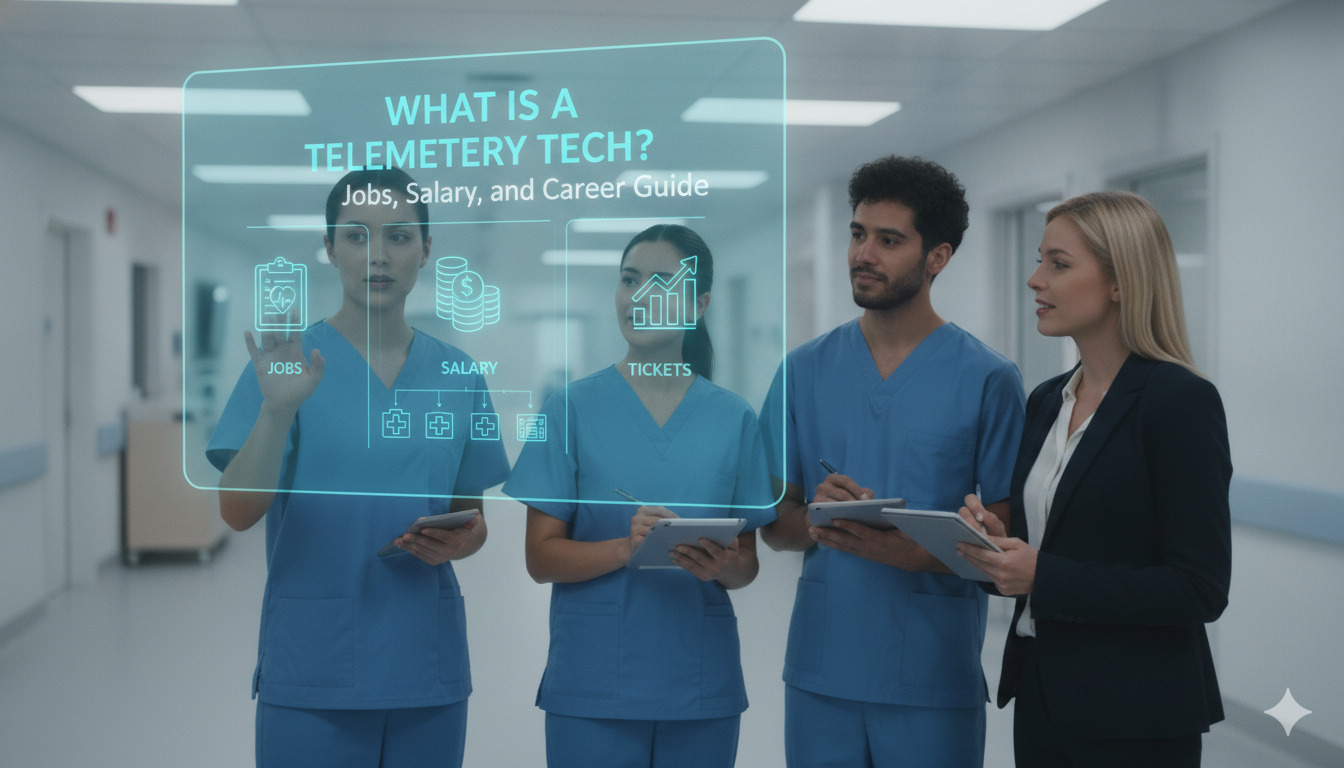
If you walk into a busy hospital, you will see lots of screens flashing with numbers and lines. These machines track a patient’s heart rate, breathing, and blood pressure. But who watches these screens all day to make sure patients are safe? That is the job of a telemetry tech. These healthcare heroes monitor heart rhythms and alert nurses if something goes wrong. It is a vital job that saves lives every single day. If you want a medical career without spending years in college, this path could be perfect for you.
The healthcare world is growing fast, and there is a huge demand for people who know how to read these heart monitors. This guide will walk you through everything you need to know about this career. We will cover the daily duties, the training you need, and how much money you can make. Let us dive in and look at how you can start your journey in this exciting field.
What Does a Telemetry Tech Do Every Day?
A telemetry tech has a very important role in a hospital. Their main job is to watch computer screens that show the heart activity of many patients at the same time. They use special patches called electrodes that stick to a patient’s chest. These patches send signals to a central monitoring station. The technician sits at this station and looks for any unusual changes in the heartbeats.
If a patient’s heart rate spikes too high or drops too low, the technician must act fast. They do not treat the patient themselves, but they instantly call the nurses or doctors. A quick alert can prevent a heart attack or other serious emergencies. They also print out heart rhythm strips and place them into the medical records for doctors to review later. It requires great focus because you are looking at screens for your entire shift.
How to Get Started: Telemetry Tech School and Training
You do not need a four-year college degree to start this medical career. Most people begin by attending a dedicated telemetry tech school or a community college training program. These programs are usually very short, often lasting anywhere from a few weeks to a few months. This makes it a great choice if you want to enter the workforce quickly.
In these classes, you will learn basic human anatomy, medical words, and how the heart functions. The most important skill you will practice is reading an EKG (electrocardiogram) strip. You will learn to identify normal rhythms versus dangerous ones. Many schools offer these courses online, while others have hands-on labs where you practice placing wires on training mannequins.
The Value of a Telemetry Tech Certification
While a high school diploma is the absolute minimum requirement, most hospitals prefer to hire someone with a valid telemetry tech certification. Having a certificate proves to employers that you truly know how to read a heart monitor. It shows you have passed a tough exam and can be trusted with patient safety.
There are a few well-known organizations that offer these exams, such as the National Healthcareer Association (NHA). To take the test, you usually need to finish a training course or have a few months of job experience. Spending the extra time and money to get certified is highly recommended. It helps your resume stand out and can lead to better job offers right away.
Understanding the Average Telemetry Tech Salary
Before you start any new career, you probably want to know about the pay. The average telemetry tech salary varies depending on where you live and your experience level. On average, these professionals earn between $35,000 and $50,000 per year. If you live in a big city or a state with a high cost of living, you will likely earn more.
Your earnings will also grow as you gain experience. Technicians who have worked for several years and hold advanced certificates earn higher hourly wages. Working night shifts, weekends, or holidays can also boost your paycheck because hospitals offer extra pay for those hours. It is a stable job with good benefits like health insurance and retirement plans.
How to Find Telemetry Tech Jobs Near Me
Finding open positions is easier than you might think because hospitals are always looking for talent. If you search online for telemetry tech jobs near me, you will likely see openings at local hospitals, cardiac clinics, and rehabilitation centers. Large medical centers usually have the most openings because they have dedicated rhythm monitoring units.
To land one of these jobs, make sure your resume highlights your clinical training and eye for detail. Even if you are fresh out of school, list your classroom hours and any hands-on practice you completed. Networking with local healthcare workers or doing an internship during school can also help you get your foot in the door at a local clinic.
Exploring the World of Travel Telemetry Tech Careers
If you love adventure and want to see new places, you should look into becoming a travel telemetry tech. Just like travel nurses, travel technicians take short-term contracts at different hospitals across the country. These assignments usually last anywhere from 8 to 13 weeks. When your contract ends, you can choose to stay longer or move to a completely new city.
This lifestyle is perfect for people who do not want to settle down in one place just yet. You could spend the winter working near a sunny beach and the summer near beautiful mountains. Travel agencies help you find these roles and often take care of your paperwork. It is a unique way to build up your resume with experience from different medical systems.
The Financial Perks of Telemetry Tech Travel Jobs
One of the biggest reasons people choose telemetry tech travel jobs is the money. These temporary roles often pay much higher rates than permanent hospital staff positions. Because hospitals need urgent help to fill gaps, they are willing to pay a premium for skilled workers who can start quickly.
In addition to a higher hourly wage, travel positions usually come with amazing tax-free perks. The staffing agency will often pay for your housing or give you a monthly money allowance to cover your rent and food. They also pay for your travel expenses to get to the new city. This allows you to save a large portion of your income while exploring the country.
How to Apply for Travel Telemetry Tech Jobs
Getting started with travel telemetry tech jobs requires a little bit of preparation. Most travel agencies want you to have at least one or two years of full-time experience in a regular hospital first. They need to know that you can step into a fast-paced environment and work without a lot of extra training.
Once you have that experience, you can sign up with a healthcare staffing agency. You will work with a recruiter who will look at your skills and match you with open positions. You will need to keep your certifications up to date and be ready to move quickly when a great contract opens up. It is a fast-moving process, but the rewards are well worth it.
Are Remote Telemetry Tech Jobs Real?
Many people wonder if they can do this work from the comfort of their own living room. The answer is yes! There are real remote telemetry tech jobs available today. Thanks to modern technology, heart monitor data can be sent safely over the internet to a technician working from a home office.
In a remote role, you still watch heart screens, but you do it on a secure home computer setup provided by your employer. You must have a very reliable, high-speed internet connection and a quiet place to work without distractions. These jobs are perfect for experienced technicians who want to skip the daily commute or need a flexible schedule.
The Career Outlook and Growth for a Telemetry Tech
The future looks incredibly bright for anyone entering this field. The population is aging, and older adults tend to have more heart conditions that require careful tracking. Because of this, hospitals and cardiac clinics are expanding their monitoring teams. Choosing to become a telemetry tech means entering a stable field with excellent job security.
This role can also serve as a great stepping stone to other medical careers. While working in the hospital, you will interact with nurses, doctors, and ultrasound teams every day. Many technicians use this valuable experience to eventually go back to school for nursing, cardiovascular technology, or healthcare management.
Summary of Telemetry Tech Career Path
To help you see the whole picture at a glance, here is a quick overview of what to expect from this career path.
| Career Aspect | Details and What to Expect |
| Education Needed | High School Diploma + Training Program (Weeks to Months) |
| Key Certification | Certified Cardiographic Technician (CCT) or Certified EKG Technician (CET) |
| Average Salary Range | $35,000 to $50,000 per year (Higher for travel roles) |
| Primary Work Settings | Hospitals, Cardiac Clinics, Remote Home Offices, Travel Agencies |
| Core Job Duty | Continuously monitoring patient heart rhythms on digital screens |
| Key Skills Required | High attention to detail, quick communication, calm under pressure |
Conclusion: Take Your First Step Today
Becoming a telemetry tech is an amazing way to launch a meaningful career in medicine without spending a fortune on tuition. It offers a fast path to employment, solid pay, and the true satisfaction of knowing your sharp eyes are keeping patients safe. Whether you want to work at your neighborhood hospital, travel the country, or even work from home, the options are wide open. If you are ready to make a difference, look into a local training program today and start your journey!
Frequently Asked Questions
1. How long does it take to become a telemetry technician?
Most training programs take between 4 to 16 weeks to finish. After completing school, you can study for a few weeks to pass your exam and start applying for local positions.
2. Can I get a telemetry job without experience?
Yes, you can get an entry-level job if you completed an approved training school and earned your certificate. Many hospitals enjoy training fresh graduates who are eager to learn.
3. What is the difference between an EKG tech and a telemetry tech?
An EKG tech hooks up a machine to take a quick, static picture of the heart’s electrical path. A telemetry tech watches a live, continuous stream of the heart rhythm over a long period.
4. Do remote technicians face a lot of distractions?
Employers have strict rules for home setups to prevent distractions. You must have a private room and dedicated hours where you only focus on the patient screens to keep everyone safe.
5. What happens if a telemetry technician misses a bad heart rhythm?
Missing a dangerous rhythm can lead to serious patient harm. That is why the job requires intense focus, and hospitals use backup alarms to help catch any sudden issues.
6. Can this job lead to a nursing career later on?
Absolutely! Working in this role gives you deep knowledge of heart rhythms and hospital workflows. This experience is highly valued by nursing schools and can give you a major advantage.