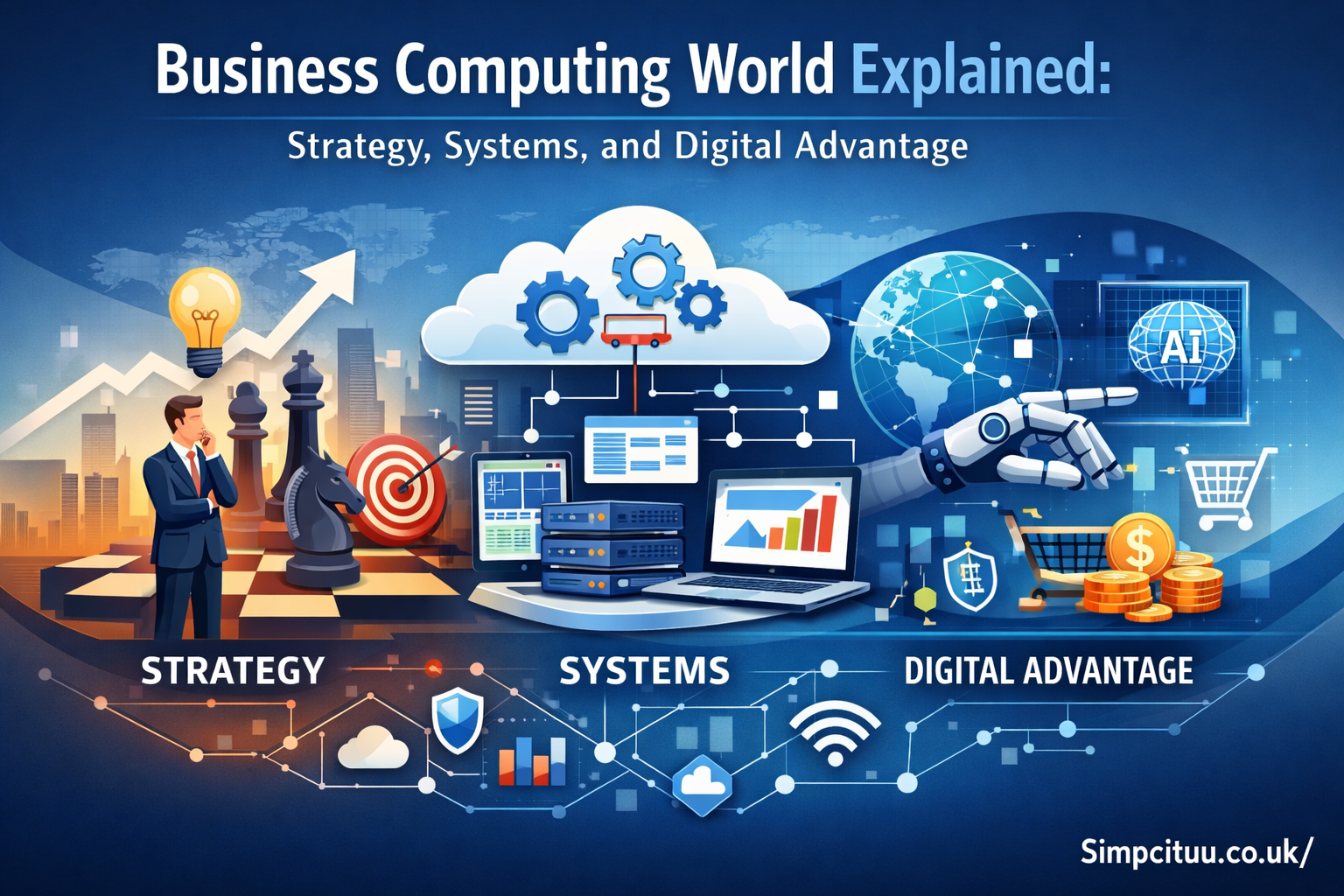
Business Computing World: A Definitive Guide to Modern Enterprise Technology
The business computing world sits at the intersection of technology, strategy, and real-world operations. It is where software, hardware, data, and human decision-making come together to shape how organizations compete, scale, and innovate in increasingly complex markets.
This guide is designed as a deep, practical, and authoritative resource. Whether you are a business leader, IT professional, strategist, or founder, you will gain a clear understanding of how computing systems drive modern enterprises, why certain technologies matter more than others, and how the business computing world continues to evolve.
Understanding the Scope of Business Computing
The business computing world encompasses all technology systems used to support commercial activities, decision-making, and operational efficiency. This includes enterprise software, infrastructure, networks, data platforms, and the governance models that keep them aligned with business goals.
Unlike consumer technology, business computing prioritizes reliability, scalability, security, and integration. Systems are designed not just to function, but to support growth, compliance, and long-term strategic objectives across departments and geographies.
The Evolution of Business Computing Systems
Early business computing focused on automating accounting and record-keeping through mainframes and batch processing. These systems were expensive, centralized, and limited to large enterprises with significant capital.
Over time, personal computers, client-server models, and later cloud platforms democratized access. The modern business computing world now emphasizes flexibility, distributed architectures, and software-driven innovation rather than fixed physical assets.
Core Components of the Business Computing World
At its core, the business computing world is built on hardware, software, data, and connectivity. Servers, end-user devices, operating systems, and networks form the technical foundation that enables business applications to run reliably.
On top of this foundation sit enterprise applications such as ERP, CRM, supply chain systems, analytics platforms, and collaboration tools. Together, these components create an integrated digital environment that mirrors and enhances real-world business processes.
Enterprise Software and Business Operations
Enterprise software translates business logic into repeatable digital workflows. Financial systems manage transactions and compliance, while HR platforms handle payroll, recruitment, and performance management.
In the business computing world, well-implemented software reduces friction between departments. It replaces manual handoffs with automated processes, enabling faster decisions and more consistent outcomes across the organization.
Cloud Computing as a Business Enabler
Cloud computing has fundamentally reshaped the business computing world by shifting infrastructure from owned assets to on-demand services. Organizations can now scale resources up or down without large upfront investments.
Beyond cost efficiency, cloud platforms enable rapid experimentation, global reach, and continuous updates. This flexibility allows businesses to respond quickly to market changes while maintaining operational stability.
On-Premises vs Cloud vs Hybrid Models
On-premises systems offer control and customization, which can be essential for regulated industries or legacy applications. However, they require significant maintenance and capital expenditure.
Hybrid models now dominate the business computing world by combining cloud agility with on-premises reliability. This approach allows organizations to modernize incrementally while protecting critical workloads and sensitive data.
Data as the Central Asset
Data is the connective tissue of the business computing world. Every transaction, interaction, and process generates information that can be analyzed for insight and optimization.
Modern businesses treat data not as a byproduct, but as a strategic asset. Data warehouses, lakes, and real-time analytics platforms enable leaders to move from intuition-based decisions to evidence-driven strategies.
Business Intelligence and Analytics
Business intelligence tools transform raw data into dashboards, reports, and predictive models. They help organizations understand performance trends, customer behavior, and operational bottlenecks.
In the business computing world, analytics is no longer limited to specialists. Self-service tools empower managers and teams to explore data directly, increasing organizational agility and accountability.
Cybersecurity in Business Computing
Security is a foundational concern in the business computing world, not an optional add-on. As systems become more interconnected, the attack surface expands across networks, devices, and users.
Effective cybersecurity combines technology, policy, and education. Firewalls, encryption, identity management, and employee awareness programs work together to protect business assets and maintain trust.
Governance, Risk, and Compliance
Governance ensures that computing systems align with business objectives and regulatory requirements. It defines who can access what, how data is handled, and how decisions are documented.
In the business computing world, strong governance reduces risk while enabling innovation. Clear policies and oversight prevent chaos without slowing progress or creativity.
Digital Transformation and Strategy
Digital transformation is not about adopting technology for its own sake. It is about rethinking how value is created and delivered using digital capabilities.
Within the business computing world, successful transformation aligns systems, culture, and leadership. Technology becomes a catalyst for new business models rather than a constraint.
The Role of IT Leadership
Chief Information Officers and technology leaders serve as translators between business goals and technical possibilities. Their role extends beyond system maintenance into strategy and innovation.
In the business computing world, effective IT leadership balances stability with experimentation. Leaders must ensure reliability while continuously exploring tools that create competitive advantage.
Workforce Enablement Through Technology
Modern computing environments shape how employees work, collaborate, and innovate. Remote access, collaboration platforms, and mobile tools redefine productivity.
The business computing world increasingly focuses on user experience. Systems that are intuitive and responsive improve adoption, morale, and overall performance.
Automation and Intelligent Systems
Automation reduces repetitive work and minimizes errors by embedding logic into software-driven processes. From invoicing to inventory management, automation improves speed and consistency.
Intelligent systems, including machine learning and AI, extend automation further. In the business computing world, these technologies support forecasting, personalization, and complex decision-making at scale.
Artificial Intelligence in Business Contexts
AI in business computing is pragmatic rather than futuristic. It is applied where data is abundant and decisions are frequent, such as fraud detection, demand planning, and customer support.
Rather than replacing humans, AI augments expertise. The business computing world increasingly relies on human-AI collaboration to improve accuracy and efficiency.
Industry-Specific Computing Needs
Different industries impose unique requirements on computing systems. Healthcare prioritizes data privacy and interoperability, while manufacturing emphasizes real-time monitoring and supply chain integration.
The business computing world adapts through specialized software, compliance frameworks, and infrastructure designs tailored to sector-specific challenges.
Small Business vs Enterprise Computing
Small businesses often prioritize simplicity and affordability, relying on cloud-based tools with minimal setup. Enterprises require deeper customization, integration, and governance.
Despite these differences, the business computing world is converging. Scalable platforms now allow organizations of any size to access enterprise-grade capabilities as they grow.
Globalization and Distributed Systems
Global operations require systems that operate across time zones, currencies, and regulatory environments. Distributed architectures ensure availability and consistency worldwide.
In the business computing world, globalization drives demand for resilient networks, multilingual interfaces, and localized compliance mechanisms.
Vendor Ecosystems and Integration
No organization operates on a single platform. The business computing world is an ecosystem of vendors, partners, and APIs that must work together seamlessly.
Successful integration strategies focus on interoperability and data flow. This reduces silos and allows businesses to adapt as technologies and vendors change.
Cost Management and ROI
Technology investments must demonstrate clear value. Cost management in the business computing world includes not just licensing, but maintenance, training, and opportunity cost.
Organizations that measure ROI effectively align technology spending with strategic outcomes. This discipline ensures sustainability and executive support.
Legacy Systems and Modernization
Legacy systems often contain critical business logic but limit agility. Replacing them outright can be risky and expensive.
Modernization strategies within the business computing world favor gradual migration, modularization, and integration. This approach preserves value while enabling innovation.
User Experience and System Adoption
A system’s success depends on whether people actually use it. Poor interfaces and complex workflows undermine even the most powerful platforms.
The business computing world increasingly prioritizes design thinking. User-centered systems drive higher adoption, better data quality, and stronger business outcomes.
Reliability, Availability, and Resilience
Downtime disrupts operations and damages trust. Reliability is therefore a non-negotiable requirement in business computing.
Resilient architectures, redundancy, and disaster recovery planning ensure continuity. In the business computing world, resilience is a competitive differentiator.
Ethical Considerations in Business Computing
Technology choices carry ethical implications, from data privacy to algorithmic bias. Businesses must consider the societal impact of their systems.
The business computing world is moving toward responsible innovation. Transparency, accountability, and fairness are becoming core design principles.
Measuring Performance and Maturity
Organizations assess their computing capabilities through maturity models and performance metrics. These frameworks identify gaps and guide improvement.
In the business computing world, continuous measurement ensures that systems evolve alongside business needs rather than falling behind.
Common Misconceptions About Business Computing
One common misconception is that more technology automatically means better performance. In reality, poorly aligned systems can increase complexity.
Another myth is that digital transformation is a one-time project. The business computing world is dynamic, requiring ongoing adaptation and learning.
Trends Shaping the Future
Edge computing, AI-driven analytics, and low-code platforms are reshaping how systems are built and deployed. These trends emphasize speed and accessibility.
The business computing world will continue to shift toward modular, intelligent, and human-centric systems that evolve in real time.
Practical Decision-Making Frameworks
Effective technology decisions start with business questions, not vendor features. Leaders should clarify objectives, constraints, and success metrics.
In the business computing world, structured frameworks reduce risk and improve alignment. They turn complex choices into manageable trade-offs.
A Comparative View of Business Computing Models
| Computing Model | Primary Strength | Key Limitation | Best Use Case |
| On-Premises | Full control | High maintenance | Regulated workloads |
| Cloud | Scalability | Vendor dependence | Rapid growth |
| Hybrid | Flexibility | Complexity | Transitional environments |
| SaaS | Speed of deployment | Limited customization | Standardized processes |
This comparison highlights how different models serve distinct needs. The business computing world thrives on choosing the right mix rather than a single approach.
Real-World Perspective
As one technology executive observed, “Business computing succeeds when systems disappear into the background and outcomes take center stage.” This insight reflects the shift from technology obsession to value creation.
In the business computing world, the most effective systems are those that quietly enable people to do their best work.
Building a Long-Term Computing Vision
A long-term vision connects today’s investments with tomorrow’s opportunities. It accounts for growth, disruption, and evolving customer expectations.
The business computing world rewards organizations that think in horizons rather than quarters, balancing immediate needs with future resilience.
Conclusion
The business computing world is not just about machines and software. It is about how technology amplifies human capability, supports strategy, and enables sustainable growth.
Organizations that master this domain gain more than efficiency. They gain clarity, adaptability, and a durable competitive edge in a rapidly changing landscape.
Frequently Asked Questions
What does the business computing world include?
The business computing world includes enterprise software, infrastructure, data platforms, security systems, and governance models that support organizational operations and strategy.
How is business computing different from consumer technology?
Business computing focuses on scalability, reliability, and integration, while consumer technology prioritizes personal convenience and entertainment within the broader business computing world.
Why is cloud computing so important for businesses?
Cloud computing enables flexibility, cost efficiency, and rapid innovation, making it a cornerstone of the modern business computing world.
How do companies measure success in business computing?
Success is measured through performance metrics, ROI, user adoption, and alignment with strategic goals across the business computing world.
What skills are essential for navigating business computing?
Key skills include systems thinking, data literacy, cybersecurity awareness, and the ability to align technology decisions with business outcomes in the business computing world.