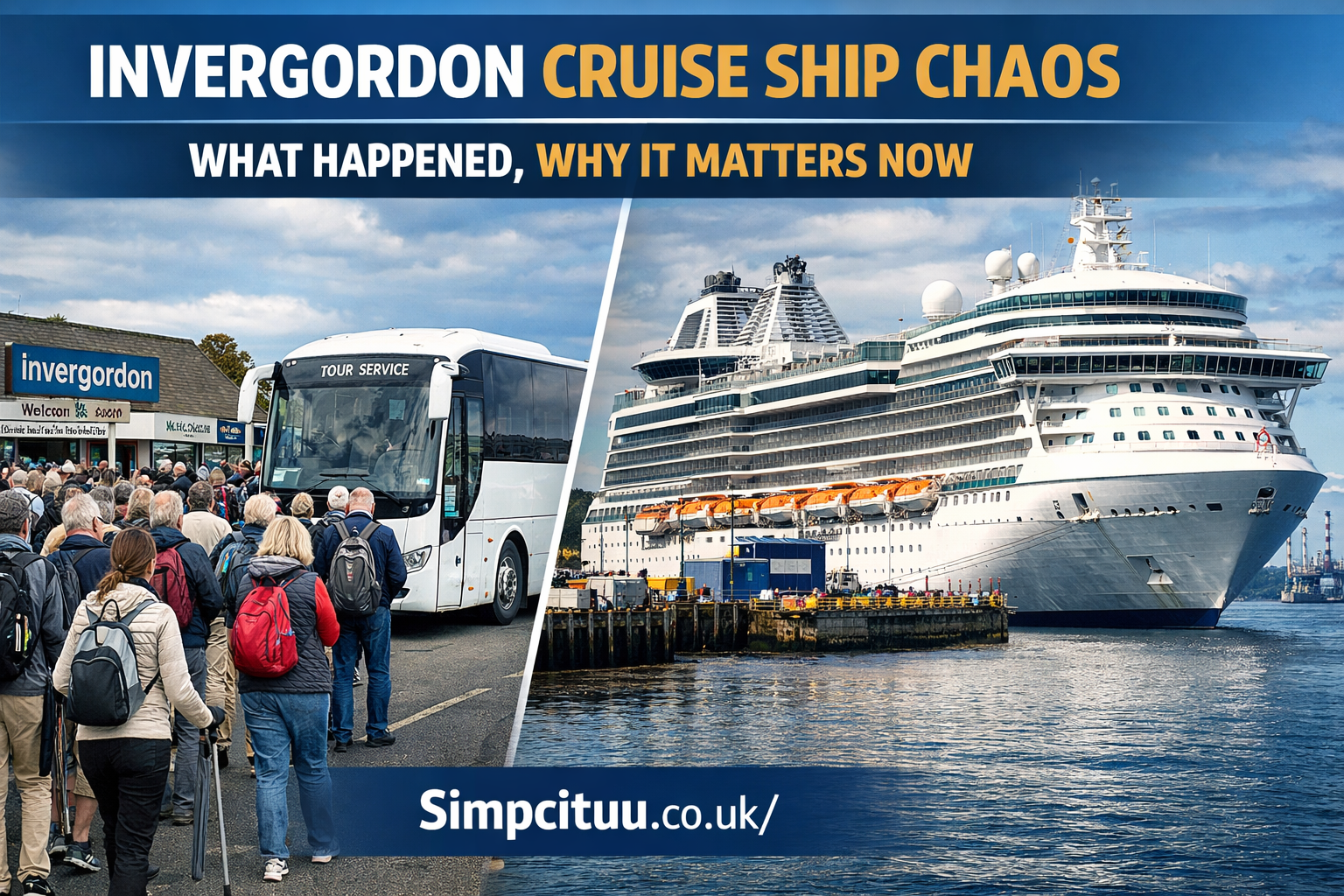
Invergordon Cruise Ship Chaos
When headlines first mentioned invergordon cruise ship chaos, many readers assumed it was another fleeting travel hiccup. In reality, the events surrounding cruise congestion at the Scottish port revealed deeper structural pressures shaping modern cruise tourism.
This guide unpacks what happened, why it escalated so quickly, and how a quiet Highland town became a case study in cruise industry strain. The goal is clarity, context, and insight rather than hype.
Understanding Invergordon as a Cruise Destination
Invergordon sits on the Cromarty Firth, offering cruise passengers access to Inverness, Loch Ness, and the wider Highlands. Its appeal lies in scenery and heritage rather than large-scale port infrastructure.
The port was never designed for multiple megaships arriving simultaneously. This structural mismatch set the stage for invergordon cruise ship chaos when demand surged beyond capacity.
What Triggered the Invergordon Disruption
The immediate trigger was the near-simultaneous arrival of several large cruise vessels. Schedules that looked manageable on paper collided with real-world constraints.
Transportation bottlenecks, tender delays, and limited berth availability compounded quickly. Once delays began, recovery became nearly impossible within a single day.
Timeline of the Chaos as It Unfolded
Early morning arrivals proceeded normally, but congestion built as tenders stacked up offshore. Passengers reported waiting hours before disembarking.
By midday, tour operators and shuttle services were overwhelmed. The situation crystallized into what many now describe as invergordon cruise ship chaos.
Passenger Experiences on the Ground
For passengers, confusion was the defining emotion. Shore excursions were missed, and communication onboard was often delayed or incomplete.
Some travelers adapted and explored locally, while others felt stranded. Expectations shaped by polished cruise marketing clashed with logistical reality.
Impact on Local Transport Infrastructure
Invergordon relies on limited road networks and a small fleet of buses. These systems function well for incremental tourism, not mass arrivals.
Once buses were tied up or delayed, cascading failures followed. Transport strain became one of the clearest contributors to invergordon cruise ship chaos.
Role of Shore Excursion Operators
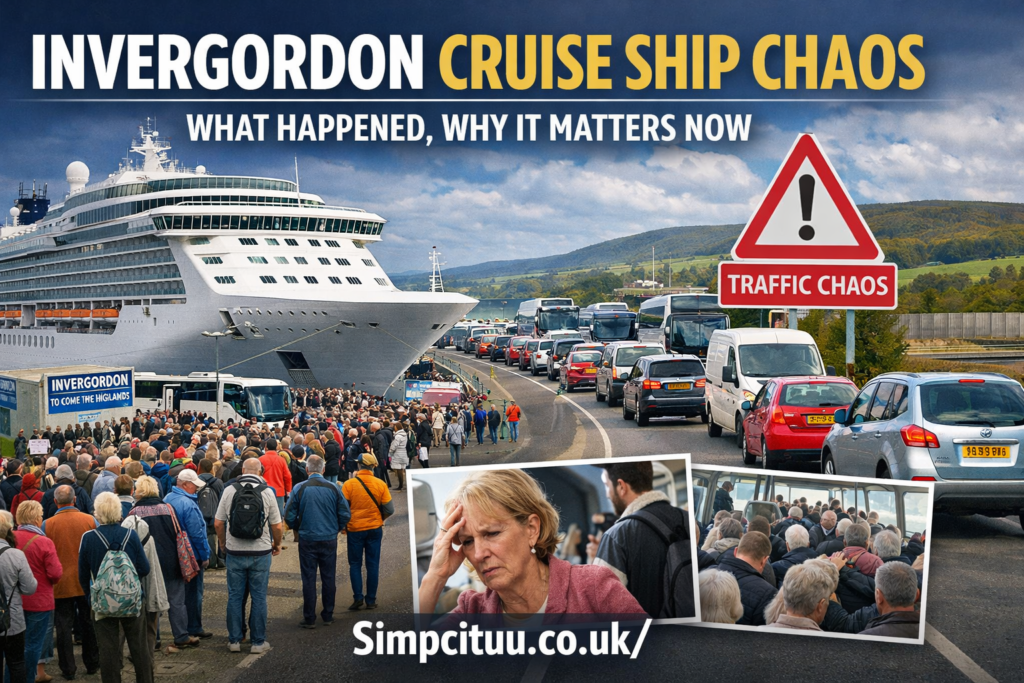
Local tour operators faced impossible choices. Honoring one group often meant disappointing another.
Many operators absorbed reputational damage despite having no control over ship scheduling. Their experience highlights fragility within cruise-dependent economies.
Communication Gaps Between Stakeholders
A recurring theme was misaligned communication. Ports, cruise lines, and local authorities operated on parallel tracks rather than shared dashboards.
Without real-time coordination, minor delays escalated. Information gaps amplified passenger frustration and operational confusion.
Weather as an Amplifying Factor
While not the root cause, weather conditions affected tender operations. Even mild wind can slow embarkation in exposed anchorages.
These natural variables reduced flexibility. In an already saturated schedule, weather effects magnified invergordon cruise ship chaos.
Cruise Line Scheduling Practices
Modern cruise itineraries prioritize efficiency and volume. Ports like Invergordon are often added to meet demand for “authentic” destinations.
However, scheduling multiple large ships at once reveals a disconnect between marketing ambition and port realities.
Port Capacity Versus Cruise Ship Size
The size of today’s ships dwarfs the capacity assumptions of many regional ports. Invergordon is far from unique in this respect.
What makes this case notable is how visibly limits were breached, turning abstract capacity debates into lived experience.
Economic Benefits and Hidden Costs
Cruise visits bring revenue to shops, guides, and attractions. On peak days, local spending spikes dramatically.
Yet unmanaged surges impose costs on infrastructure, residents, and reputation. Invergordon cruise ship chaos illustrates this delicate balance.
Community Response and Local Sentiment
Residents expressed mixed feelings. Some welcomed the economic boost, while others felt overwhelmed by sudden crowds.
Community sentiment shifted as daily life was disrupted. Sustainable tourism became a frequent topic in local discussions.
Media Coverage and Narrative Framing
Media outlets often favored dramatic framing. Images of queues and missed tours dominated coverage.
While accurate, this focus sometimes overshadowed systemic causes, simplifying a complex operational failure.
Industry Reaction After the Incident
Cruise lines acknowledged passenger dissatisfaction but emphasized external constraints. Ports cited lack of long-term planning authority.
The diffuse responsibility made accountability difficult, a common pattern in cruise-related disruptions.
Lessons for Future Cruise Planning
The incident underscores the need for capacity-based scheduling. Demand cannot be the sole driver of itinerary design.
Shared data systems and arrival caps could prevent similar outcomes elsewhere.
Comparison With Other Port Congestion Events
Invergordon is not alone. Similar congestion has occurred in Reykjavik, Dubrovnik, and parts of Alaska.
What distinguishes this case is how clearly scale overwhelmed infrastructure, making it a reference point for future policy debates.
A Structured Breakdown of Key Pressure Points
| Area | Normal Capacity | During Peak Day | Result |
| Tender Operations | Moderate | Exceeded | Long waits |
| Bus Transport | Limited | Saturated | Missed tours |
| Port Staffing | Adequate | Overextended | Delays |
| Passenger Flow | Staggered | Simultaneous | Congestion |
This table highlights how multiple stress points aligned. No single failure caused the chaos; accumulation did.
Quote From an Industry Perspective
A port operations consultant summarized the issue clearly:
“Cruise tourism fails when volume outpaces coordination; ports feel it first, passengers feel it hardest.”
This perspective reframes invergordon cruise ship chaos as a systems issue rather than a one-off mistake.
Misconceptions About Cruise Port Readiness
Many travelers assume listed ports are fully equipped for large ships. In reality, designation does not equal capacity.
Smaller ports often rely on tenders and temporary transport solutions, which are inherently fragile.
The Role of Passenger Expectations
Expectations shape satisfaction. Passengers expecting seamless experiences are more likely to feel wronged.
Clearer pre-arrival communication could recalibrate expectations and reduce perceived failure.
Regulatory Oversight and Its Limits
Ports operate under local and national regulations, but cruise scheduling remains largely commercial.
Without binding limits, economic incentives often override caution until disruption forces change.
Long-Term Implications for Invergordon
The port faces a crossroads. It can invest heavily, limit arrivals, or reposition its role within itineraries.
Each option carries trade-offs for the community and cruise partners alike.
What This Means for Future Travelers
Travelers may become more selective about ports and seasons. Awareness of congestion risk is growing.
Informed passengers are better equipped to adapt when plans change.
Strategic Takeaways for the Cruise Industry
The industry must reconcile growth with sustainability. Smaller ports cannot absorb unlimited expansion.
Invergordon cruise ship chaos serves as a warning signal rather than an anomaly.
Conclusion
The events labeled as invergordon cruise ship chaos were not random or unavoidable. They emerged from predictable pressures where ship size, scheduling ambition, and local capacity collided.
Understanding this incident helps travelers, communities, and cruise operators make better decisions. It stands as a clear reminder that successful cruise tourism depends as much on restraint and coordination as on demand.
Frequently Asked Questions
What caused invergordon cruise ship chaos?
The chaos resulted from multiple large ships arriving simultaneously at a port with limited tender and transport capacity.
Were passengers compensated after invergordon cruise ship chaos?
Some cruise lines offered partial refunds or credits, but responses varied by operator and excursion type.
Is Invergordon still a cruise port after the chaos?
Yes, Invergordon remains a cruise destination, though future scheduling may be more cautious.
Could invergordon cruise ship chaos happen again?
Without structural changes to scheduling and capacity limits, similar disruptions remain possible.
What should travelers learn from invergordon cruise ship chaos?
Travelers should research port capacity, expect variability, and remain flexible when visiting smaller cruise destinations.